Ergonomic Fireline Tool
Designed and built an ergonomic power tool concept to reduce strain during fireline construction work.
Challenge
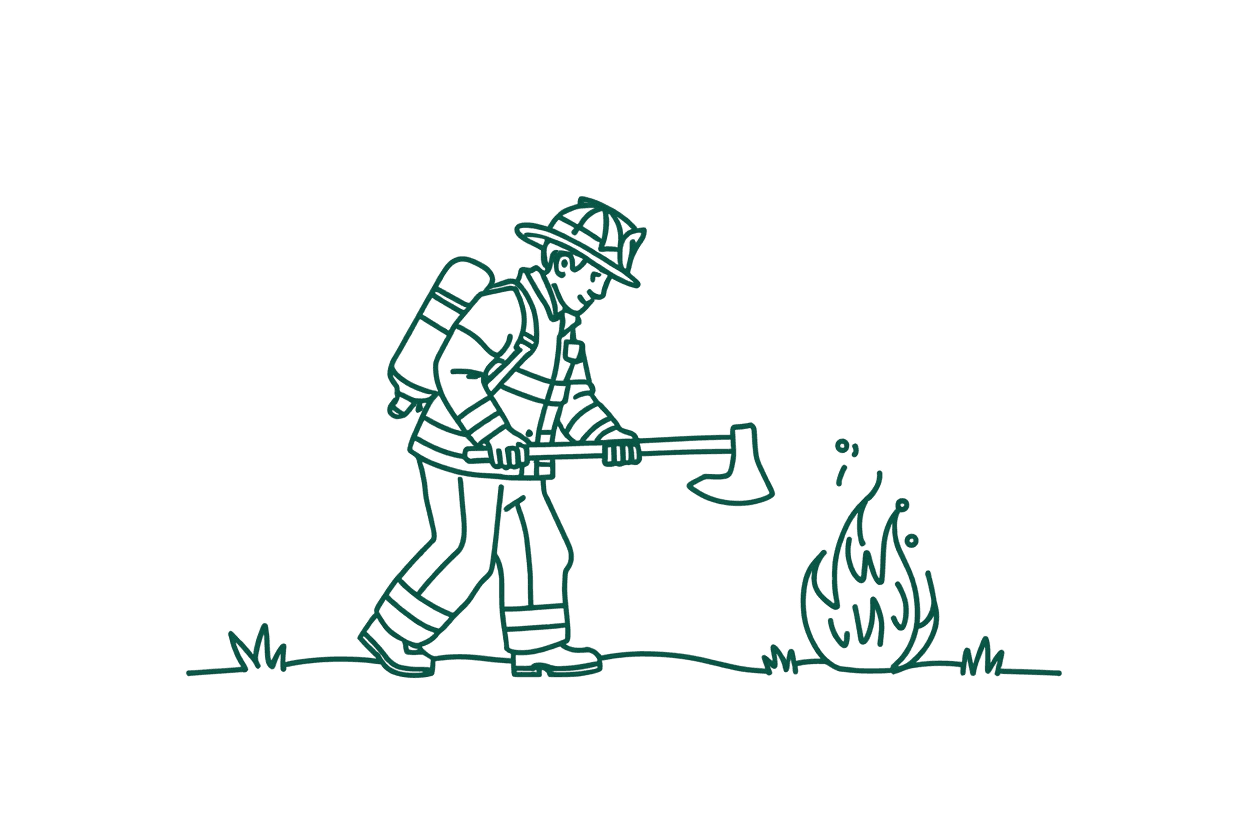
Wildland firefighters use manual tools for 8 to 12 hour shifts, with high strain on wrists, elbows, shoulders, and trunk. Explosive, repetitive movements and awkward postures drive musculoskeletal injury over long shifts.
Solution
Used the fireline task cycle to frame the problem, then applied Kinovea motion capture and biomechanics data (REBA and RSI scoring) to prioritize what to fix. Built and iterated a prototype with vibration damping, an adjustable handle, and safety features like two-step activation and clear labels.
Outcome
A new tool concept that improved posture and reduced effort, meeting targets including 25% decrease in RSI and 50% decrease in REBA components.
What I Learned
I learned that building is a discipline. I had to translate messy movement into something measurable, then let the data shape the design instead of only relying on my first instincts.